Fascinated by djinn, I was swept into this story from page one. Shrouded in mystery and fantastic lore, the elusive, powerful magic of the ancient djinn races lies at the heart of this month’s book of choice. First in S.A. Chakraborty’s Daevabad Trilogy, The City of Brass will not fail to disappoint.

Especially not if you love jinnis as much as I do…

From the bustling streets of eighteenth-century Cairo to the towering brass walls surrounding legendary Daevabad, home to djinn of multiple sparring tribes, you will be swept up in Nahri’s adventure to discover who she is and what importance her nebulous heritage and magical abilities will have on her future.

Meet Dara. An Afshin warrior-djinn Nahri summons who is bound to Daevabad as much as Nahri, but whose dangerous past looms as a threat over their growing relationship.

Meet Ali. A zulfiqar-wielding, dashing Geziri prince who is destined to become Qaid, the top military official in the Royal Guard of Daevabad’s djinn army, and at desperate odds with his father’s political machinations to maintain control over the kingdom.

Chakraborty’s characters will entrance you. I guarantee you will feel transported to another realm, a lush kingdom rife with palace intrigue and political turmoil.

Please hurry.

Read this book so I’m not tempted to spoil anything after I’ve torn through the rest of the trilogy.

If you manage to put the book down long enough to drop me a note and let me know what you think, I won’t keep you long. I know how it goes.

I’ve already bought Book Two, The Kingdom of Copper.

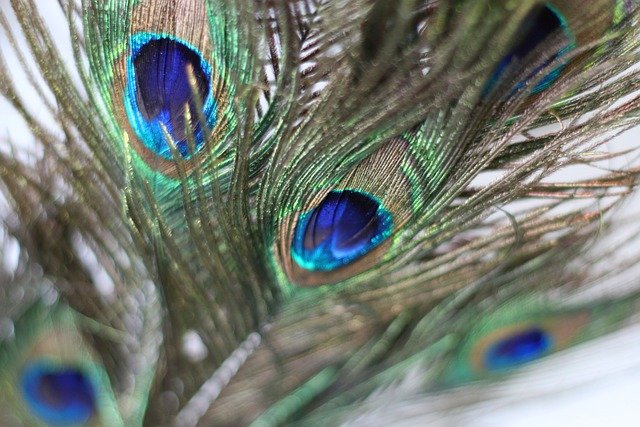
Feather Plumage Peacock Lightweight  - emminum / Pixabay


I am a cut-glass meteor
showering sparks through the sky,

shaking the firmament as I rise
a colorful contrail streaming behind.

I am a dazzling peacock
fanning his feathers on display.

Kaleidoscopic iridescence, both
frivolity and function in full sway.

No impediment can contain me,
I am chapter, verse, and rhyme.

Mind’s ear to the page, I listen,
fastening on magic every time.

Man Swirl Wormhole Mountain Top  - PhotoVision / Pixabay


Wait a minute, you say.

I’m not even sure I am a creative person. How can I learn to trust my creativity more?

Trust me. If you’re alive and breathing on planet Earth (last time I checked, that’s the only way you can be reading this), you ARE, in fact, a creative person. That’s right. The sheer fact of being human makes you creative by nature. 

At its heart, creativity is problem-solving. We solve problems every day, don’t we? Finding a new route to work when the way we usually go is closed. Crafting a novel Halloween costume. Making new foods to eat on experimental cooking night. There are dozens of ways we as humans find creative solutions to ordinary problems we face every day. 

What’s another way to get to the same place?

How can I disguise myself so others won’t recognize me?

What can I eat that will taste different?

In the artistic realm, the solutions we search for as creatives are more internal than external, but regardless, the problems we seek to remedy fall along similar rational lines as those of our more everyday concerns.  

What’s another way of understanding what I observe?

I want to comprehend how I feel about ___. (Fill in the blank.)

That ___ moves me by its beauty. I want to capture this sensation. 

In my imagination, this ___ could be/turn out so differently. 

We may approach the problem-solving we must do using different tools, be they paintbrushes, pens, dancing shoes, or computers, but ultimately it’s the answers inside our own selves that we seek when we undertake any artistic endeavor involving self-expression.

The reason the “art” part is so scary is because it is internal. Our art is coming from the deepest part of ourselves, the part we prefer to keep hidden from the world most, if not all, the time. 

Don’t believe the lies I fed myself for over twenty years. I can’t paint. I can’t even draw a straight line. I can’t keep a beat. I can’t sing. Therefore I must not, cannot, be an artist.

I repeat, if you are a human being, then you are creative. Staying alive requires that you be so. 

If you’ve ever had a creative dream, whether it be to write a novel, draw a sketch, finger paint on rocks, plant a garden, or simply hum a tune from start to finish while you’re in the shower (yes, this counts!), keep reading. I’ll list some practical ways to keep the dream alive inside you while dispelling those nasty voices of self-doubt, fear, and criticism that do their darndest to blot out your dream.

  1. Journal out the bad stuff. The voice of your creativity isn’t going to yell at you. Most of the time it’s a still, quiet knowing. Finding a means of diminishing the voices of self-doubt and fear is crucial. For me, keeping a journal is one good way to do that. Often, as I’m hashing out how I feel about something I’ve recently written or am about to write, I will stop and think, “Good Lord! I wouldn’t talk to anyone else this way. Why am I speaking to myself like this?” Being aware of how we relate to our inner selves is crucial to developing a healthy creative psyche.
  2. Set good habits. This one’s a toughie but absolutely essential if you desire an ongoing relationship with your creativity. There will be days you don’t feel like making your art, far more than the number of days you feel inspired. Make your art anyway, even if it turns out bad. (It may not actually be as bad as you think.) Showing up is key. Many days I don’t feel like writing, but once I set my mind to it, I’m pleasantly surprised by how much I’ve been able to get into it. In the end, it’s more about silencing the inner critic than my own ability to put words to paper. 
  3. Learn the craft. Take classes if you can. Read, read, read. Join clubs and online communities related to your art. Attend conferences. Searching for ways to improve your work will not only keep your mind engaged in the challenge but will also lead to further inspiration.
  4. Share with others. A hard step but an important one. We do not create in a vacuum and our best work should not remain there. Although when we are first starting out our tendency is to protect what we make, at some point we have to share it if we expect to grow. We never know who is going to be inspired by what we are doing. Sharing our work is often the only way we discover how valuable it really is to those around us.
  5. Cheerlead your successes. Every instance in which you choose to commit to your creativity delivers another strike against your inner critic. Why not give him more reasons to flee by championing yourself with every success, no matter how minor? So you only wrote 300 words. So you only edited one photograph in your portfolio. Celebrate the small victories and soon they won’t be so small anymore! 

Edith Eger, psychologist and Holocaust survivor, states “No one can take away from you what you’ve put in your mind.” 

Although inspiration may be fleeting, our inner artist never leaves us. Cultivating a healthy attitude toward our creative psyche is critical to keeping open the channel of authentic self-expression that is essential to our work.

Have a story you’d like to share about how you overcame your inner critic? Or do you find yourself struggling in your creative pursuits? I’d love to hear from you. Drop me a line and let’s talk. Let’s not waste any time getting back to making our art!

The Bird King book cover

I did tell you I was on a magic realism kick, didn’t I? G. Willow Wilson’s The Bird King is the perfect follow-up to last month’s selection. 

The Spanish conquistadors are about to invade the Iberian peninsula and negotiate the sultan’s surrender. Join Fatima on the adventure of a lifetime as she must choose whether to remain in service to the castle or flee the kingdom in order to save her best friend Hassan’s life.

Hassan is no ordinary palace mapmaker. He possesses a secret magical talent. Simply by touching his pen to paper, he can alter reality to create maps of places that have never been. The conquistadors have labeled him a sorcerer and deemed his gift a threat to the monarchy.

Will Fatima and Hassan escape and will their friendship survive? What will freedom cost them in the end?

Perhaps one of my favorite aspects of this book is the jinni who guides Fatima and Hassan as they contemplate making their escape. 

I am a sucker for jinnis, whether they pop out of a magic lamp or not.

This was the first book of G. Willow Wilson’s that I have read and it won’t be the last. Her prose is fluid. The lavish description and elegant characterization will linger in your imagination for days.

Give this book a read. You won’t be sorry.

Then drop me a line and let me know what you loved most about it!

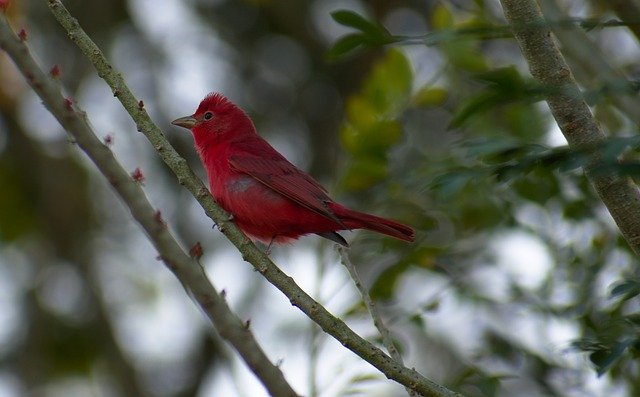
Bird Tree Summer Tanager Nature  - RonaldPlett / Pixabay


A flame of scarlet
among the branches
peering down below,
you see me standing,
gazing at you with
my binoculars.

You don’t fly away,
but you flit closer,
curious and calm,
crest feather aloft.

Pit-ti-tuck, you call,
pit-ti-tuck again.
Your head swivels ’round,

forest in your sight.

Great, gleaming landscape,
green, earthly delight.
Speak to me once more
before you take flight.
I long to capture
a glimpse of the world
as perceived by one
so seemingly slight.
Frog Toad Amphibian Tree Frog  - CassidyMarshall / Pixabay


Dimpled brown skin
and jet black eyes –
the way you stare,
you seem so wise.
Creamy, soft belly
melts in my hand,
I can hardly
resist you – 
tiny fingers
and long, grippy toes.
What are you thinking?
Your throat gives a chirp.
I could hold you
forever,
marvel at your colors,
your intricate design.
You leap from my grasp.
I can still feel your cool.
Hidden in the grass,
tiny little jewel.

Bluebird Bird Eastern Bluebird  - Naturelady / Pixabay


To catch sight of
his azure flash
swooping in flight
is always a
quiet surprise.

Herald of spring,
sign of good luck,
both are true, yes.
More to the point
is that a bird
can be so blue.

Color of sky,
a painter’s hue –
so out of place
amid the trees.
He’s not aware
he isn’t brown,
neutral, or tan.

Thoughts lifted high,
he soars with ease.
His heart is full,
completely free.

Butterfly Insect Watercolor  - Piyapong89 / Pixabay

How do you know when you’re creatively starved? What does that even look or feel like? 

If I’m being honest, I didn’t know I was creatively starved until I picked up my pen and wrote my first poem after twenty years of artistic silence. I had forgotten what the rush of creation felt like. Transforming a mental image into black-and-white words on paper felt like nothing short of magic. 

I was free to speak from a place in myself I had kept hidden for so long. 

The problem with being creatively starved is that we don’t realize what dire straits we are in. We’ve quieted our inner artist for so long, we’ve forgotten the thrill that drives us to create in the first place. 

We long to feel refreshed, to discover hidden dimensions of ourselves, or simply to escape the humdrum and explore the fertile realm of our imaginations. 

But we haven’t given our inner artist permission to do so. 

We weren’t all born to be artists.

That’s the lie I fed my creative psyche for years when in reality, I had plenty I wanted to say and virtually no way of saying it. The pen in my mind’s eye wasn’t frozen to the page. It was packed away in a dark, dusty drawer with a lock to which I’d buried the key. 

I need more. This can’t be all there is to life. 

The words beat a daily refrain in my head and all the while, my inner artist languished, waiting for me to unearth the key from beneath the mountain of fear I’d heaped on top of it. Creative starvation feels like hollowness, and at times, abject helplessness. 

At its core, creative starvation is fear. Fear of failure. Fear of rejection. Fear of self-expression. Fear of facing the deepest, darkest, most untapped places inside ourselves and exposing them to the light of our awareness.

In order to be creative, we have to face our fears.

Our most painful losses. Our toughest memories. The hardest experiences of our lives will surface as we open ourselves to our creative impulses and if we aren’t prepared to handle them emotionally, mentally, and physically, they will threaten to silence our inner artist again.

I’d love to share with you a few techniques that have kept me grounded whenever I feel myself starting to drift from a creative mindset. This list is not meant to be exhaustive. Think of them as helpful suggestions on how to tune in when your inner artist taps your shoulder, hoping to grab your attention.

  1. Mindfulness/meditation. It is no coincidence that shortly after I began practicing yoga, I started writing. The practice of meditation silences the fragmented, haphazard thinking that runs at full blast most of our waking lives, holding us hostage to fast-paced schedules and overwhelming amounts of technological distraction. It allows us to tune in to what our inner artist may be trying to tell or show us, without all the static of everyday life interfering.
  2. Indulge in hobbies you love that refresh you. I dabbled in a number of creative pursuits (painting, crochet, sketching) before I returned to my writing. Giving my right brain space to play was important. It was all part of the process of coaxing my inner artist out of hiding. 
  3. Travel outside your comfort zone. A trip to the mountains inspired my first poem four years ago. If travel isn’t possible for you, there is always someplace new to explore in your hometown. Go to a park you’ve never been to or visit a new coffee shop you’ve been meaning to try. 
  4. Don’t overthink or critique your first efforts. Have fun. Your inner critic will always be your harshest judge. Don’t give him/her air time in your mind. You are setting aside time to spend with your inner artist just as you would with a cherished friend or family member – no party poopers allowed!
  5. Surround yourself with believers. This one’s super important. When you are first in creative recovery, your artistic skin is very thin. Make sure you cultivate relationships with others who believe in you, even on the bad days. They may be few and far between, but they are your creative support system. Choose wisely and let them know how much you appreciate them. 

I hope you enjoyed this post! I have so much more I want to share with you about cultivating creativity in your life, so stay tuned. Feel free me to drop me a line with any questions or comments. I would love to hear from you!

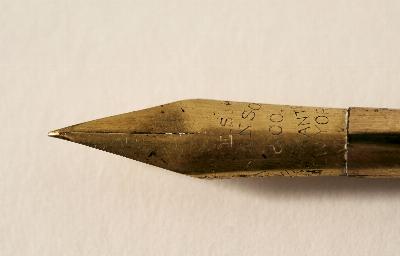
Calligraphy pen tip


A poet deals in words – 
their rhythms, sounds, and curves
delight him to no end.
He cherishes their meaning,
strings them out one by one,
then rearranges them –
his work is never done.

For he always thinks of one
who said it better than him – 
a turn of phrase or metaphor
more delicately spun.
He reads to fill his days,
the masters’ genius he imbibes.

But does he copy them?
Oh no, not ever.
He wouldn’t dream of it.
Though one might argue that
by imitation, he survives.

My fellow book lovers! Until now we have been sharing our collective love for books on social media or through the chance text.

Help!

I need a book fix!

What good books have you read recently?

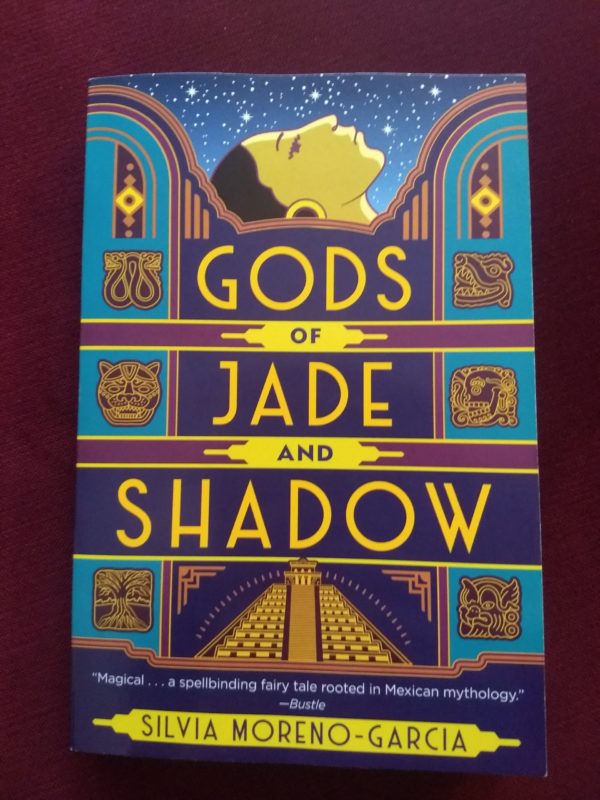
I’m here to help, with my own recommendations at least! Like many of you, my reading interests fall across a variety of genres. Lately, I’m on a magical realism kick and Gods of Jade and Shadow captured me from the moment I opened it and started reading. 

This is a fairy tale like you have never read before. It’s a real Cinderella story, only with a modern twist and an exotic backdrop. In her grandfather’s room, Casiopea Tun stumbles upon a mysterious wooden box containing a set of bones, accidentally releasing the spirit of one of the gods of death belonging to the Mayan underworld. Her quest?

I’m not telling. You’ll have to read the story. 

Old family secrets will be unearthed. 

There will be romance.

Magical intrigue and escapades.

And plenty of adventure, set in a stunning landscape.

Silvia Moreno-Garcia has quickly become one of my favorite authors and I’m sure she will become one of yours, too. 

Drop me a line if you decide to read this book. I’d love to hear your thoughts!